Who Did It Best An Energy Expert Shares Homes’ “Red Flags”
He knows all. He sees all. He loves attics. An energy expert shares common red flags he spots in Maryland homes.
Share


Energy expert Alex Olson teaches you how to spot the most (and least) energy-efficient homes on the Maryland market.
Do you know what separates an energy-efficient home from an energy-sucking nightmare? Alex Olson does. He’s the energy program manager at Windsor Hills’ own Winner Insulation. He’s seen everything the area has to offer, from drafty old 19th century row houses to frighteningly efficient zero energy townhouses. Now, he’ll teach you exactly how to spot an energy-efficient home, including what to look for, ask for … and run from.

Alex, one of your very many impressive titles is energy auditor. What … is that?
It’s like a home inspector with a focus on energy use.
What kinds of energy problems are you looking for? You know, the red flags?
The first thing I look for? Attic access, always. In a lot of old Baltimore row homes, there just … may not be one. No hatch in the ceiling, no pull-down stair — there may be no clearance up there. It might be just nothing.
And that’s where most of a home’s heat loss is through.
So when there’s not a lot of clearance and it’s been sealed off completely, I don’t have a lot of faith in their air sealing and insulation overall.
Truly, the attic is the hat of the home. What’s something else a future homeowner should watch out for?
So, sometimes, you get into these crawl spaces or attics and you’ll find air ducts, right? Well, sometimes the ducts are just … not connected to anything.
You’ll be in a room wondering why no air’s coming out of the vents, and you’ll find that the duct that feeds the room is completely disconnected from the main trunk line.
The heating and cooling is blowing directly into a crawl space or attic space … which sends it right outside. I see it more than you’d expect. One out of 10 homes, sometimes two out of 10.
The local phenomena of disconnected ducts. What’s one more issue you see that’s unique to area homes?
Because this was a particularly cold winter, we got a lot of water pipes freezing and bursting in spaces like wall cavities, crawl spaces and — worst of all — attics.
You know, these spaces are not properly insulated or protected from outside temperatures. Which means they’ll achieve outside temperatures. So, a lot of burst water pipes exposed the energy inefficiency of these older homes and buildings.
Well, what’s cheaper: proper insulation or fixing every burst pipe in your soaking wet basement?
I believe you already know.
Let’s say I’m looking to upgrade an older home but looking to start small. What’s a good place to start?
In some cases, you can do a standalone water heater replacement project, where you’re swapping out an older water heater for an electric heat pump water heater.
The quick pitch? They use, like, one-fourth of the energy. And because hot water is something you use year-round, it’s a big chunk of home energy use. You’re using hot water for showers, cooking, laundry, dishes … everything.
The more people in your home, the more you’re using. So, an electric heat pump water heater will significantly cut your hot water energy usage …and when it comes to savings, it can be a lot.
What’s another low barrier energy-efficient option?
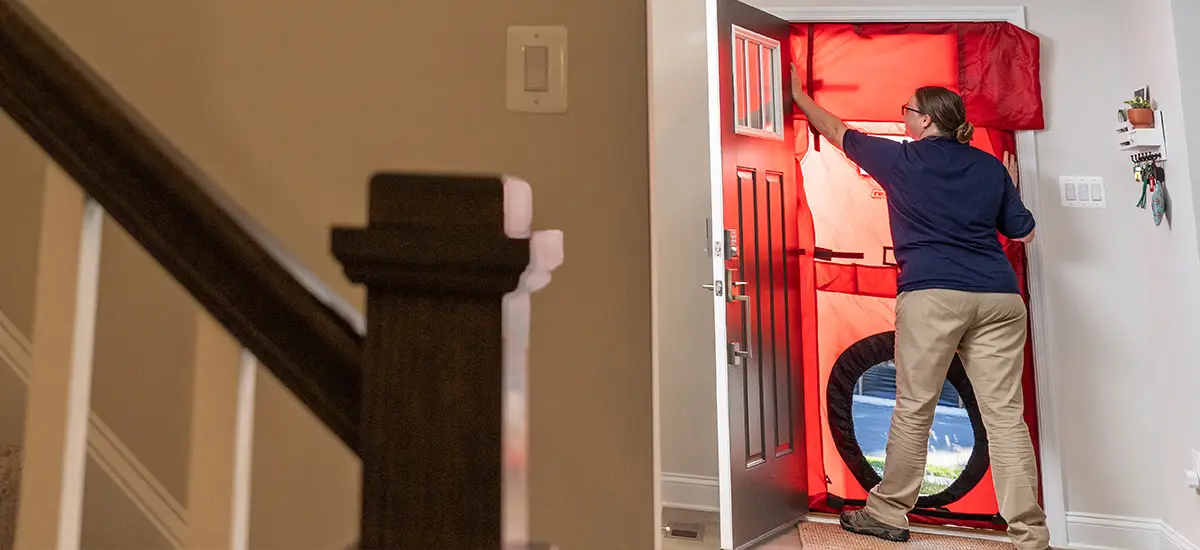
I’d start with a home energy audit, which usually starts with a blower door test, usually on the front door. It’s a big fan we use to blow air throughout the house, allowing us to track where hot or cold air may be leaking from your home.
While that’s running, we work our way from the top down, measuring each floor and entering data into an energy model. Usually, it starts in the attic, we do an insulation inspection. We’ll check out those top plates, junction boxes, those ceiling and wall penetrations.
We’re checking windows, exterior doors, working our way on down towards the bottom of the house and then, if we can get to it, the sort of “foundation groups,” the room and band joists, whether it’s a basement or a crawl space. Do we have air coming in from there?
It’s a big fan we use to blow air throughout the house, allowing us to track where hot or cold air may be leaking from your home.
Well, I should hope not!
We’re examining ventilation, including kitchen exhausts, bathroom exhausts … we’ll do an exterior walk around just to sort of scope out those foundation groups and any potential other maintenance issues we can find. Drainage concerns, or plants growing on or into your house … roofing issues, whatever we can find.
So it’s like I said at the top, it’s a home inspection, but with a focus on energy. It takes about an hour and a half, maybe two hours, but all the data we collect goes into our energy modeling software. It estimates how much energy you can save by improving things like your air sealing or insulation or HVAC systems, and it also tells us how much in rebates you can get for those improvements.
So, $10,000 for insulation, up to $15,000 if you’re switching to an electric water heater or heating and cooling system. And yeah, the average rebate per project right now is, like, $6000 ... So, a home energy audit prequalifies you for those rebates.
That was an incredible list of things to check inside a home. And right off the dome, too. Is there anything you don’t know about home energy?
Alex jokes: It’s the only thing I’m good at.